Metal braces
The most universal and proven option — effective even for the most complex cases, at the most accessible price. A good choice for children and teenagers, where cost and effectiveness matter more than appearance.
Straightening smiles
Led by Dr. Maria Redlińska-Górnicka, a 2nd-degree orthodontic specialist with more than 20 years of experience — care matched to your bite, age, and life.
Orthodontic treatment at Saska Smile is available not only to children, but also to adult patients of any age — we increasingly see patients who decide to correct their bite and smile in their forties or fifties.
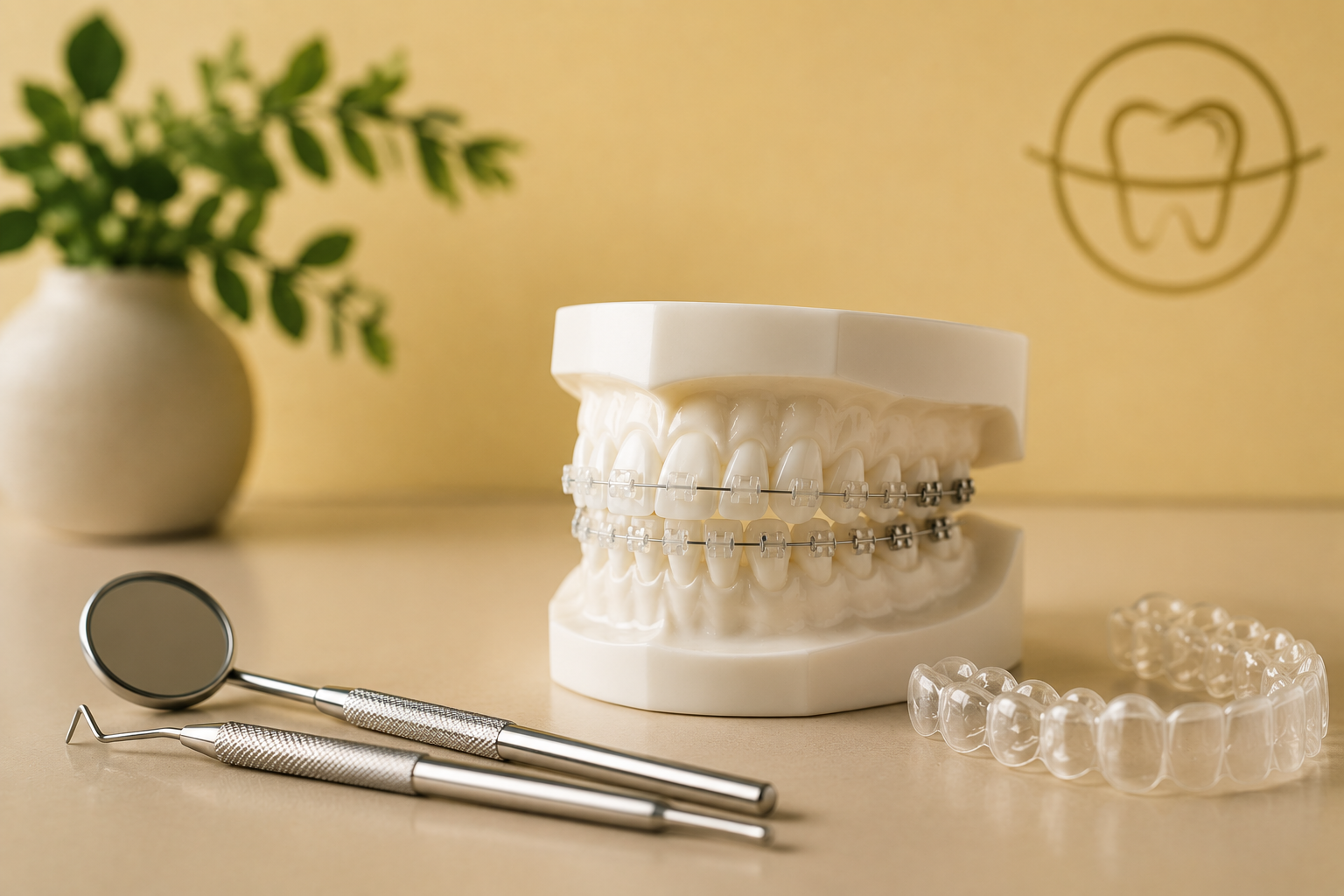
We offer a full range of appliances: metal, self-ligating, aesthetic (white front), ceramic, and sapphire Damon braces, as well as clear aligners, including Invisalign. We match the method to each patient's bite, age, and expectations rather than applying one template to everyone.
Diagnostics before treatment — scans and X-rays — are done on site, on our own digital pantomogram. That means no referral to an outside imaging lab and no extra visit before treatment planning can begin.
Bite problems left untreated in childhood don't resolve on their own — they can deepen over time and make oral hygiene harder, raising the risk of cavities and gum disease. A regular orthodontic check-up, ideally from around age 7, catches issues before they become harder and more costly to treat.
“Well-planned orthodontic treatment is an investment that pays off for a lifetime — in health, hygiene, and confidence.”
Your options
The most universal and proven option — effective even for the most complex cases, at the most accessible price. A good choice for children and teenagers, where cost and effectiveness matter more than appearance.
The brackets guide the wire without separate ligatures, which usually shortens check-up visits and can reduce the friction acting on teeth as they move.
Brackets closer to natural tooth colour, less visible than classic metal — a choice for patients who want discretion during treatment without giving up fixed braces.
Clear, self-ligating brackets made of synthetic sapphire — the most discreet version of fixed braces, often chosen by adult patients with demanding professional lives.
Clear, removable aligners instead of traditional braces — they can be taken out for meals or important meetings. They work well for many moderate bite issues, in both teenagers and adults.
Used mostly in younger children, during the growth period, when the goal is to correct how the jaws grow relative to each other, not just align individual teeth.
Who we welcome
We see patients of very different ages and needs — from a first check-up at age 7 to a bite correction for someone in their fifties.
This is the recommended age for a first orthodontic check-up — not because treatment starts immediately, but because by this age it's already clear whether the jaws are growing correctly and whether earlier intervention is worth planning.
The most common time to get fixed braces — most permanent teeth have already erupted, and treatment at this age usually moves faster than in adults, since the jaw bones are still growing.
Orthodontic treatment in adulthood is entirely possible and increasingly common — whether for health reasons (an uneven bite makes hygiene harder and wears teeth down faster) or for appearance. We favour discreet options here: aligners, sapphire, or ceramic braces.
Sometimes orthodontics is a preparatory step — straightening tooth position before a crown, bridge, or implant makes further treatment easier and improves its lasting result.
How treatment unfolds
A conversation about your expectations, an initial look at your bite, and a discussion of possible treatment methods.
A scan, pantomogram, and cephalometric imaging if needed — all done on site, on our own digital equipment.
Choosing the method (fixed braces or aligners), an estimated treatment length, and a schedule of check-up visits.
Treatment begins — we walk you through hygiene and appliance care to avoid complications during treatment.
Regular, scheduled visits every few weeks — adjusting the appliance's force and checking progress.
After braces come off — a retainer or retention splint keeps the result in place for years, not just until your next visit.
Why patients choose us
Treatment is led by Dr. Maria Redlińska-Górnicka — a 2nd-degree orthodontic specialist with more than 20 years of clinical experience, a member of the Polish Orthodontic Society (PTO), the European Orthodontic Society (EOS), and the World Federation of Orthodontists (WFO).
Our own digital pantomogram means full X-ray diagnostics happen in the same practice, without referring you to an outside lab or an extra visit elsewhere.
Every treatment plan is matched to the specific bite, age, and expectations of the patient — including the choice of method, treatment pace, and frequency of check-ups.
Larger orthodontic work — fixed braces, aligners — can be spread into manageable instalments through our partnership with Mediraty, instead of one large upfront payment.